“The Narrator” (2025)Installation of Glazed Ceramic and Watercolor on PaperMega Gallery, Philadelphia, PA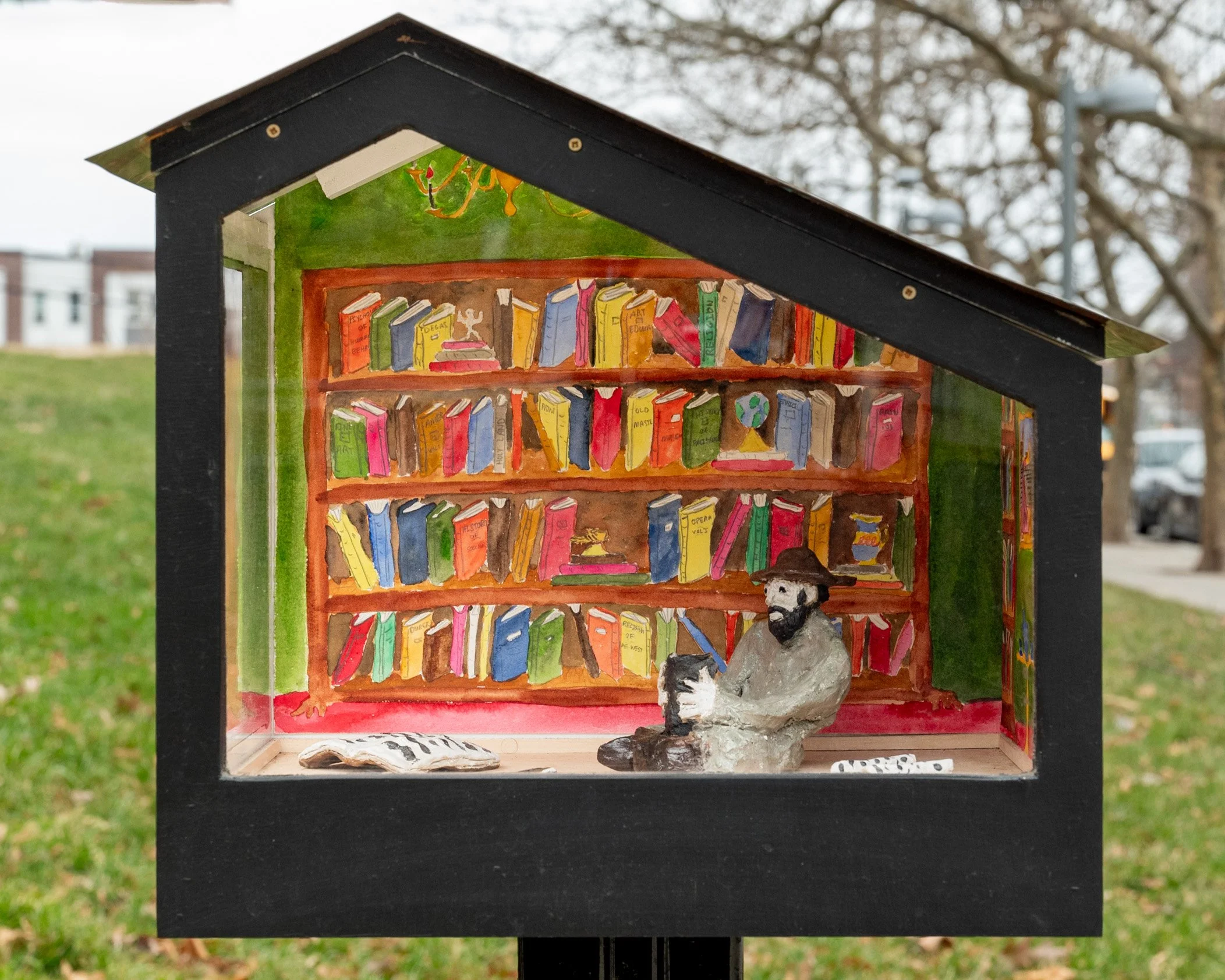
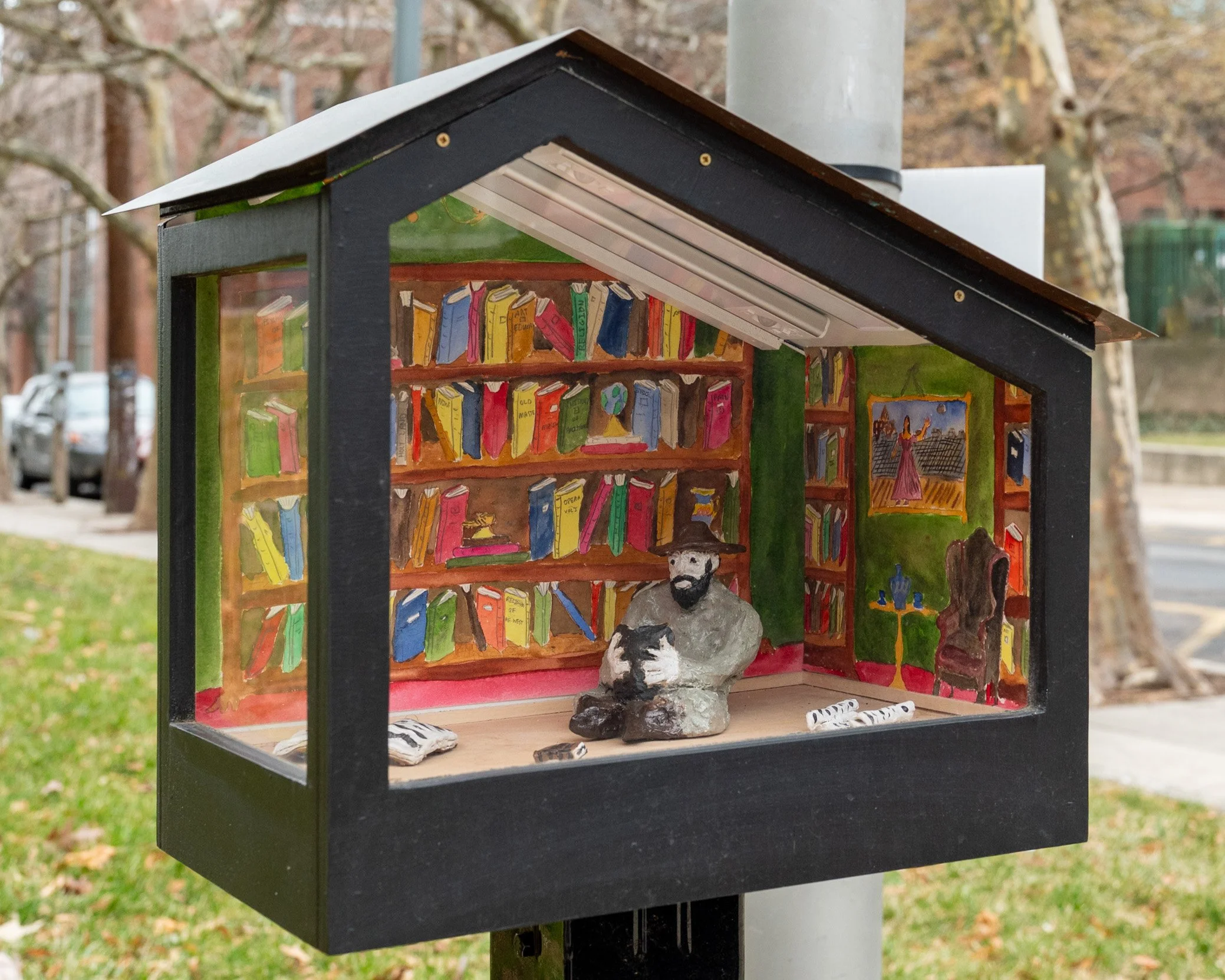
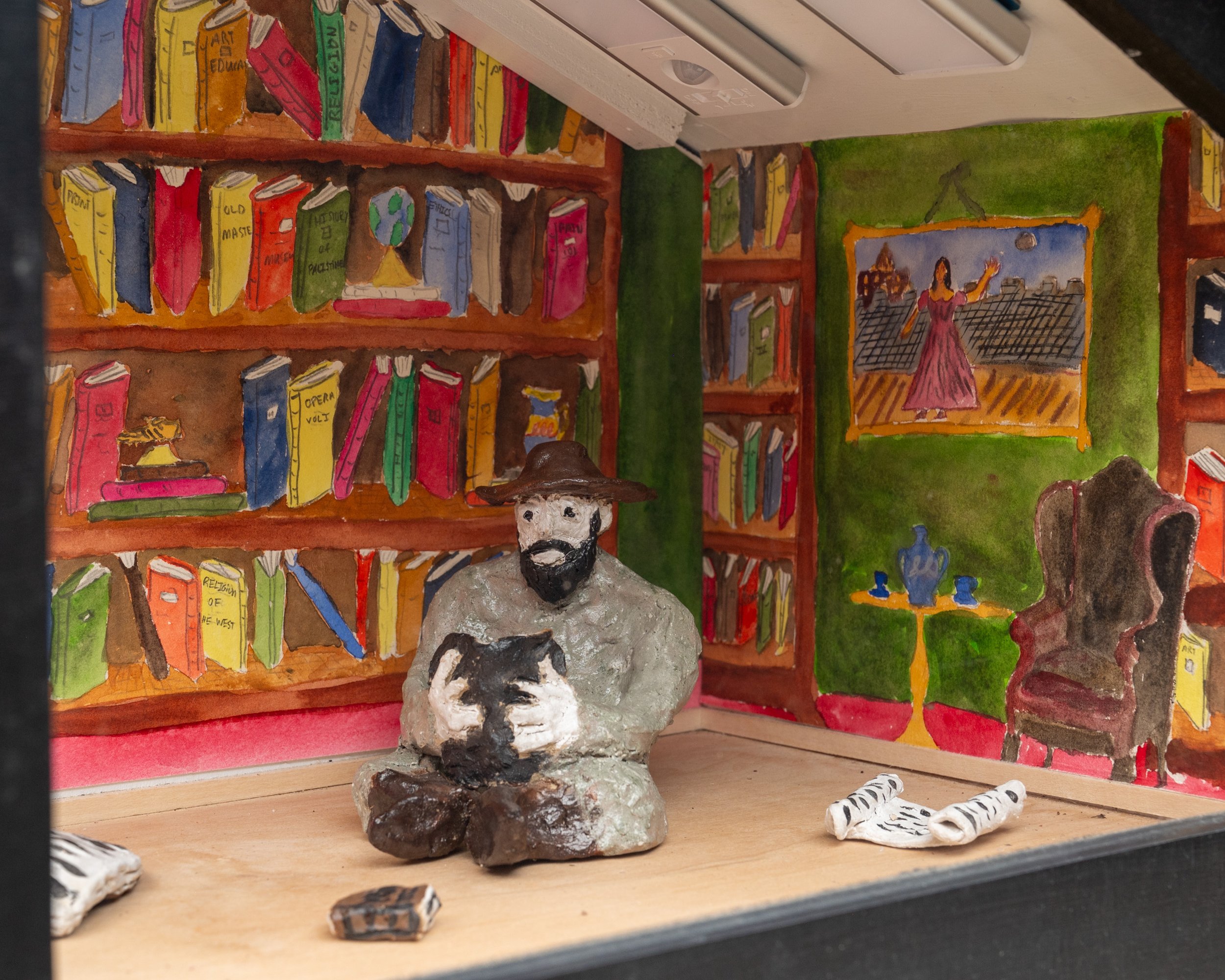
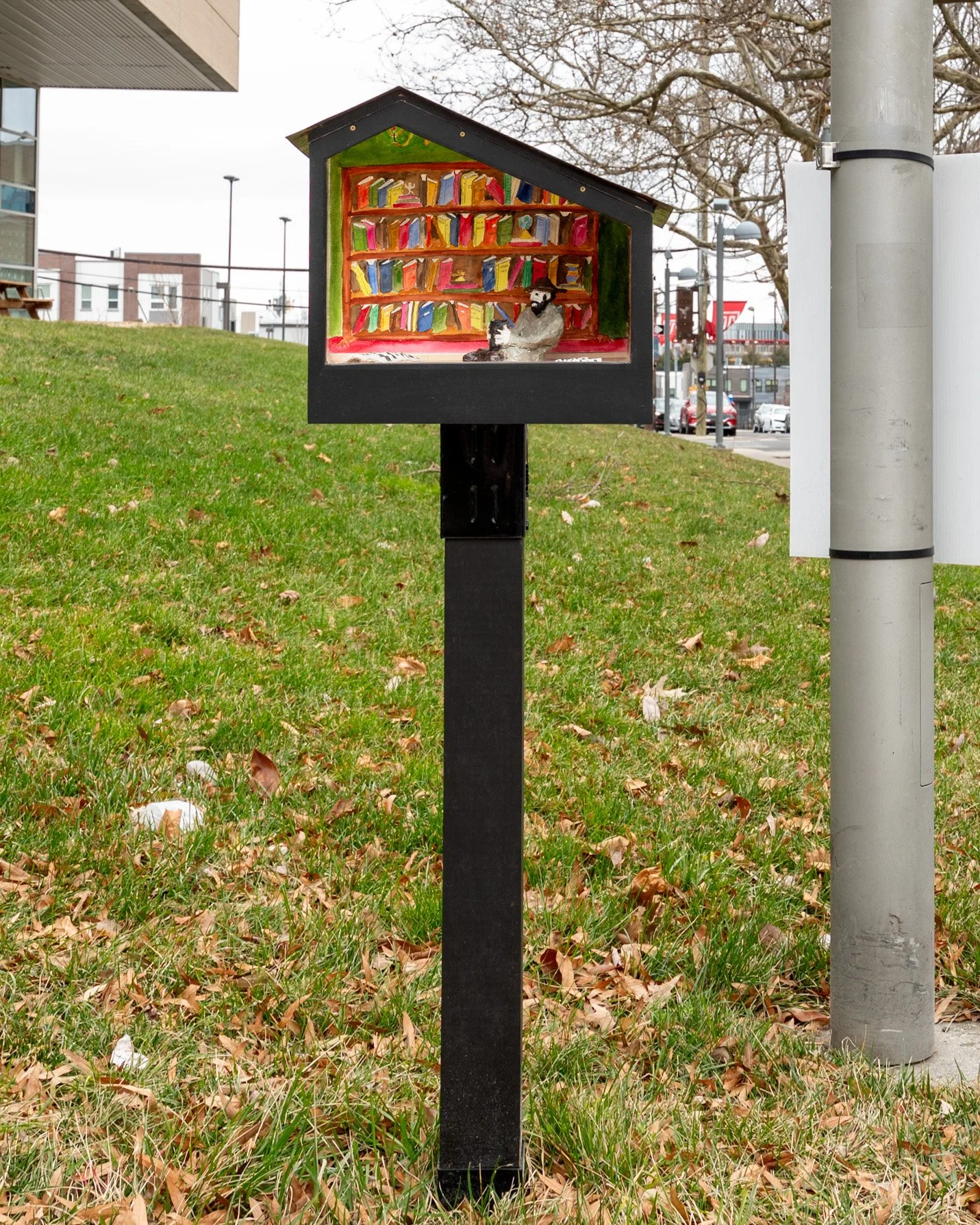
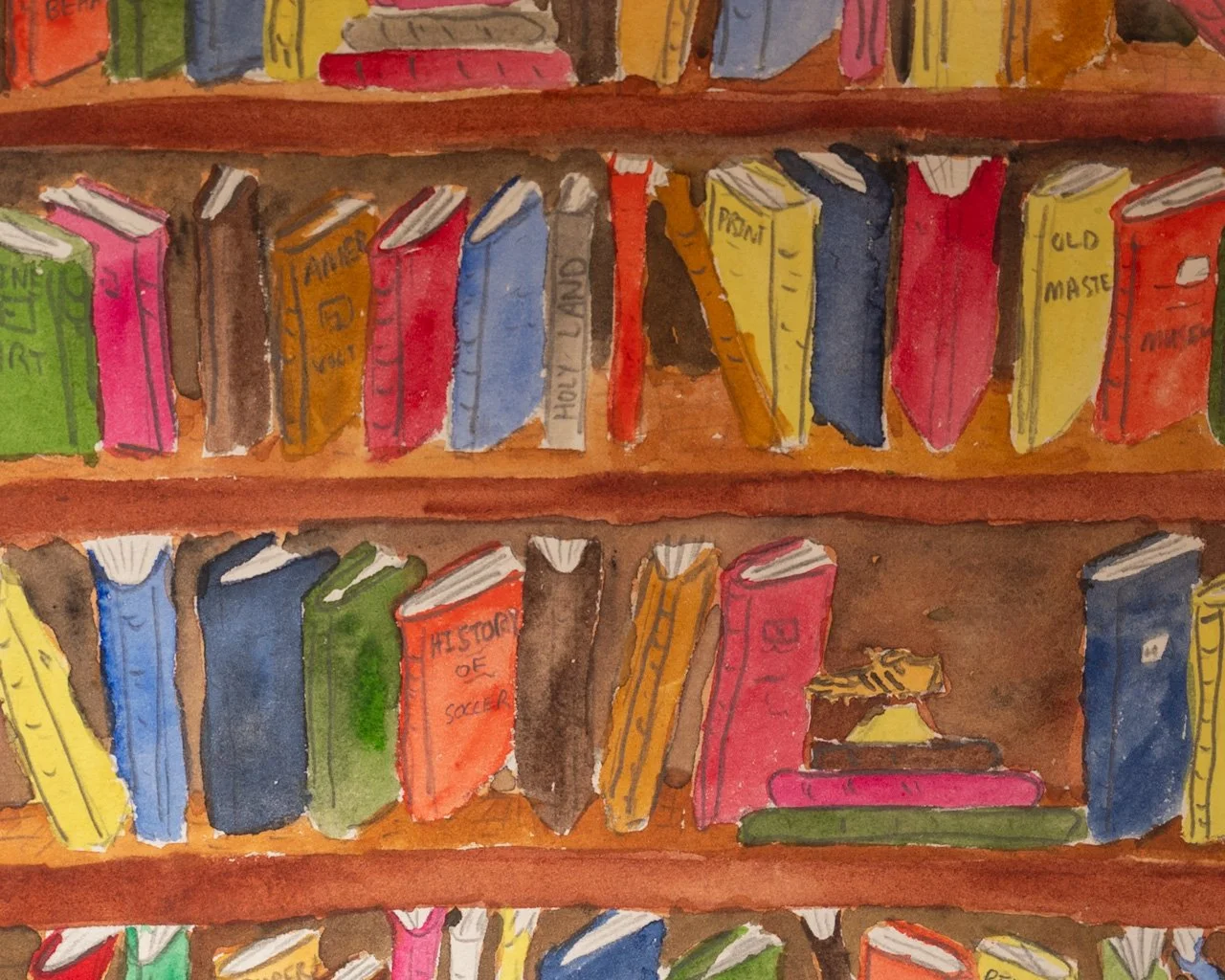
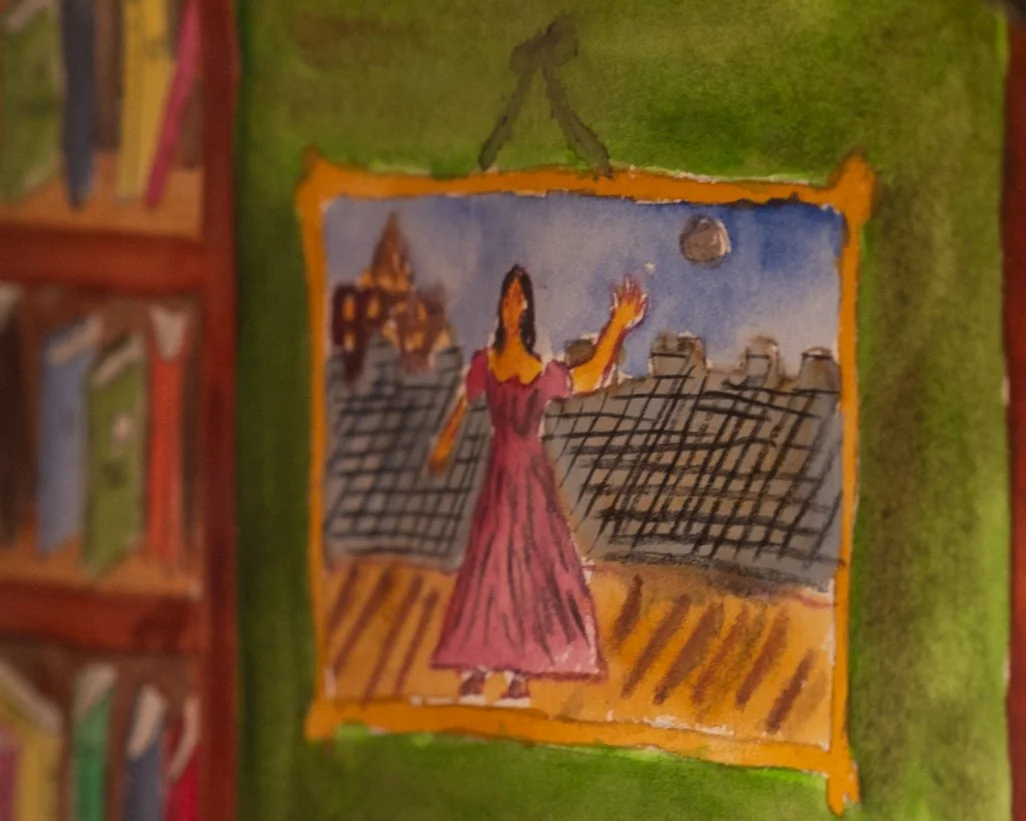
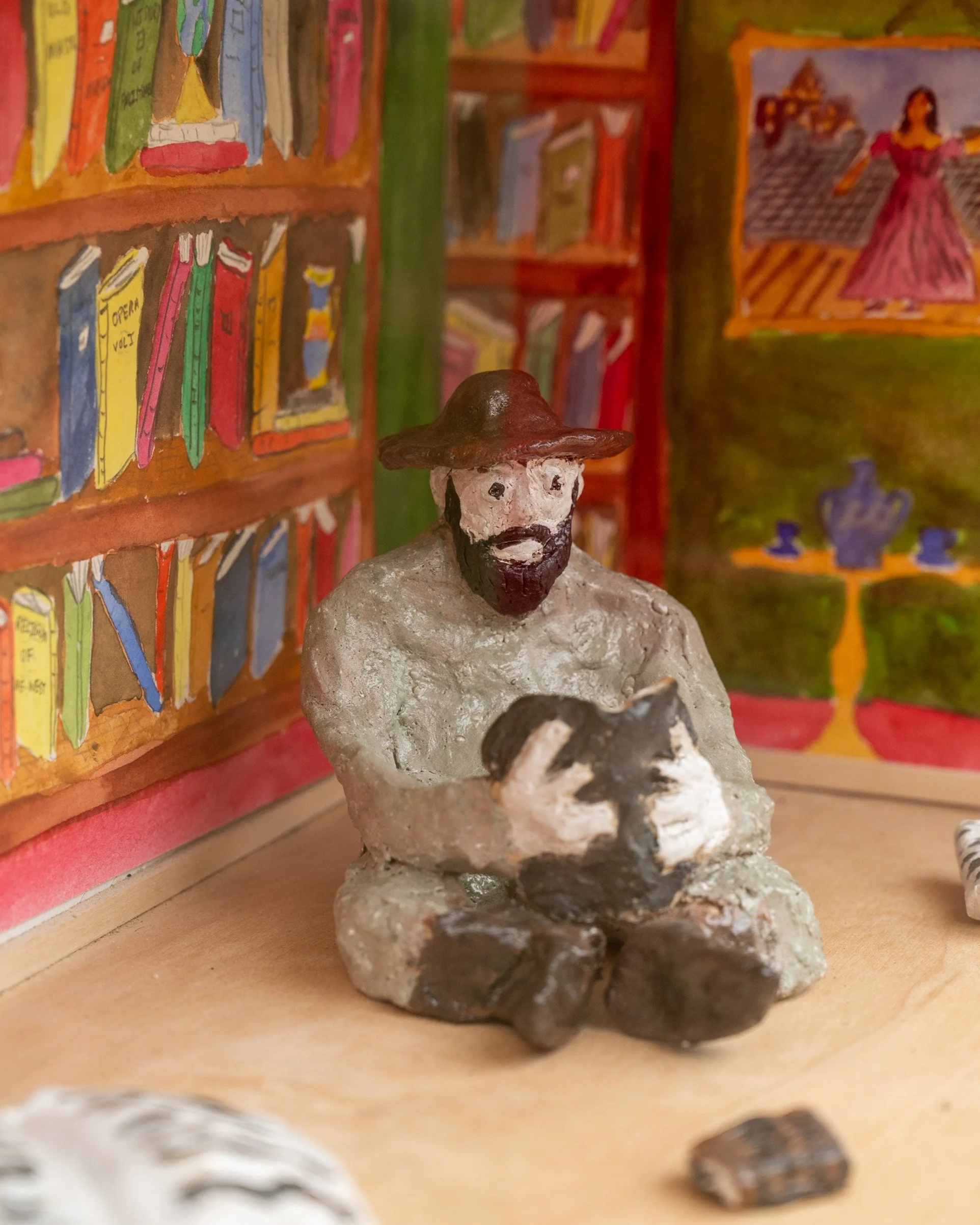
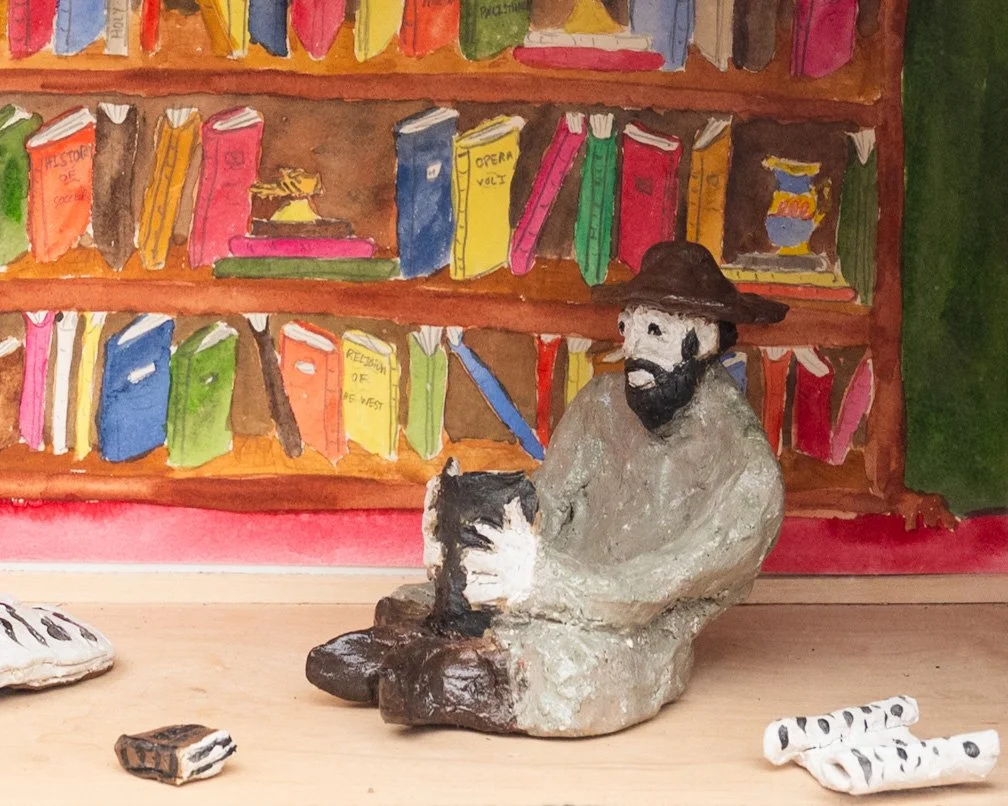
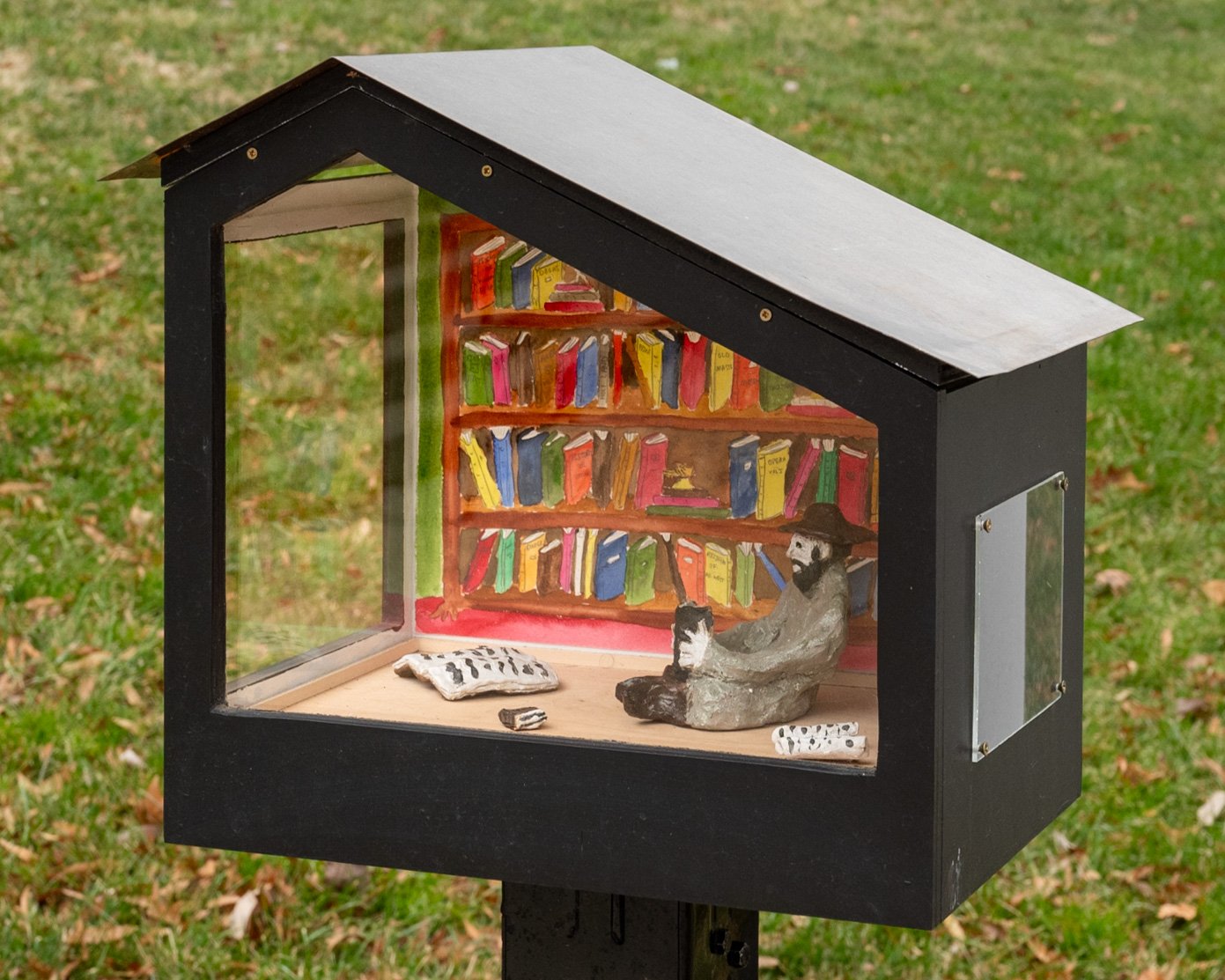
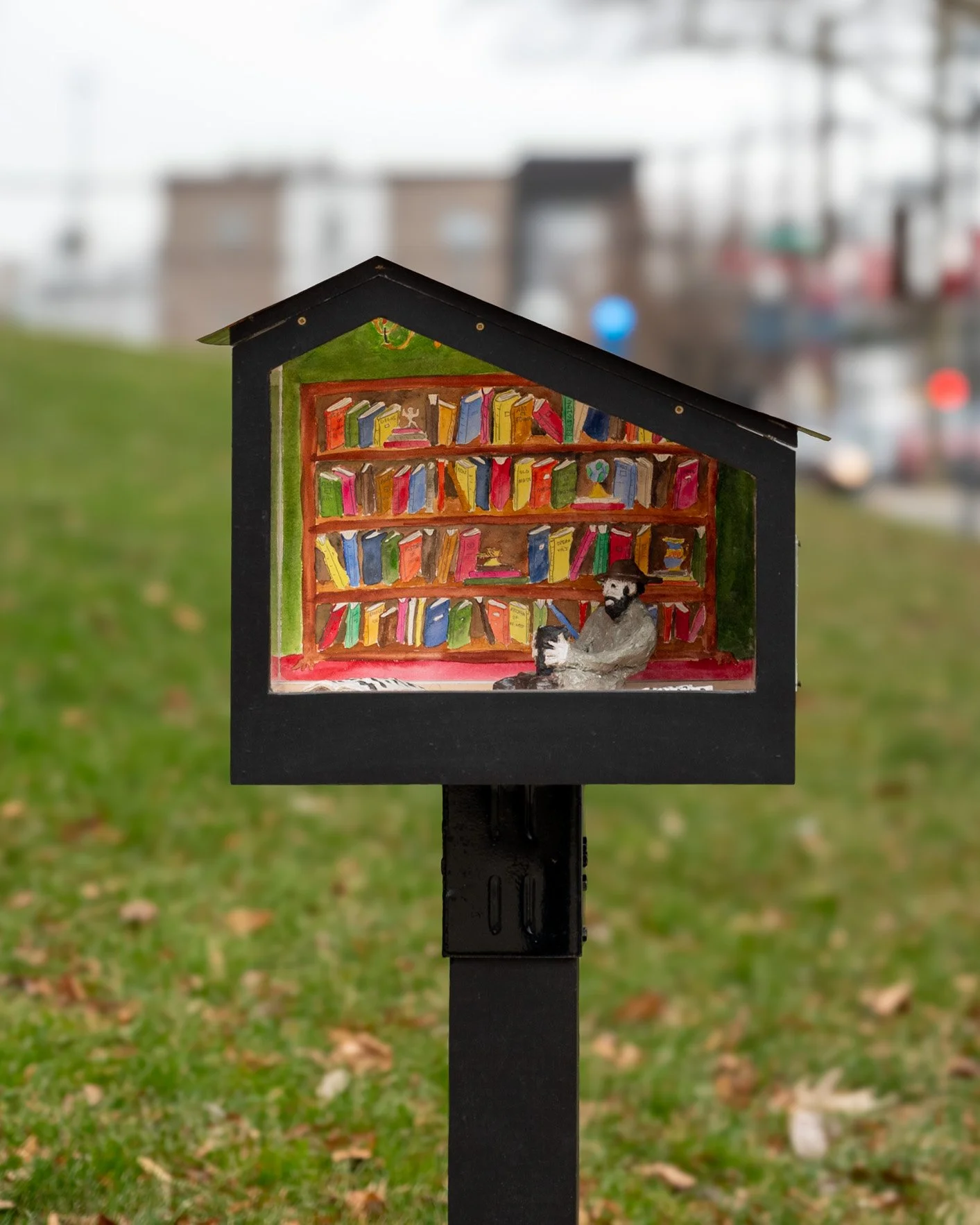
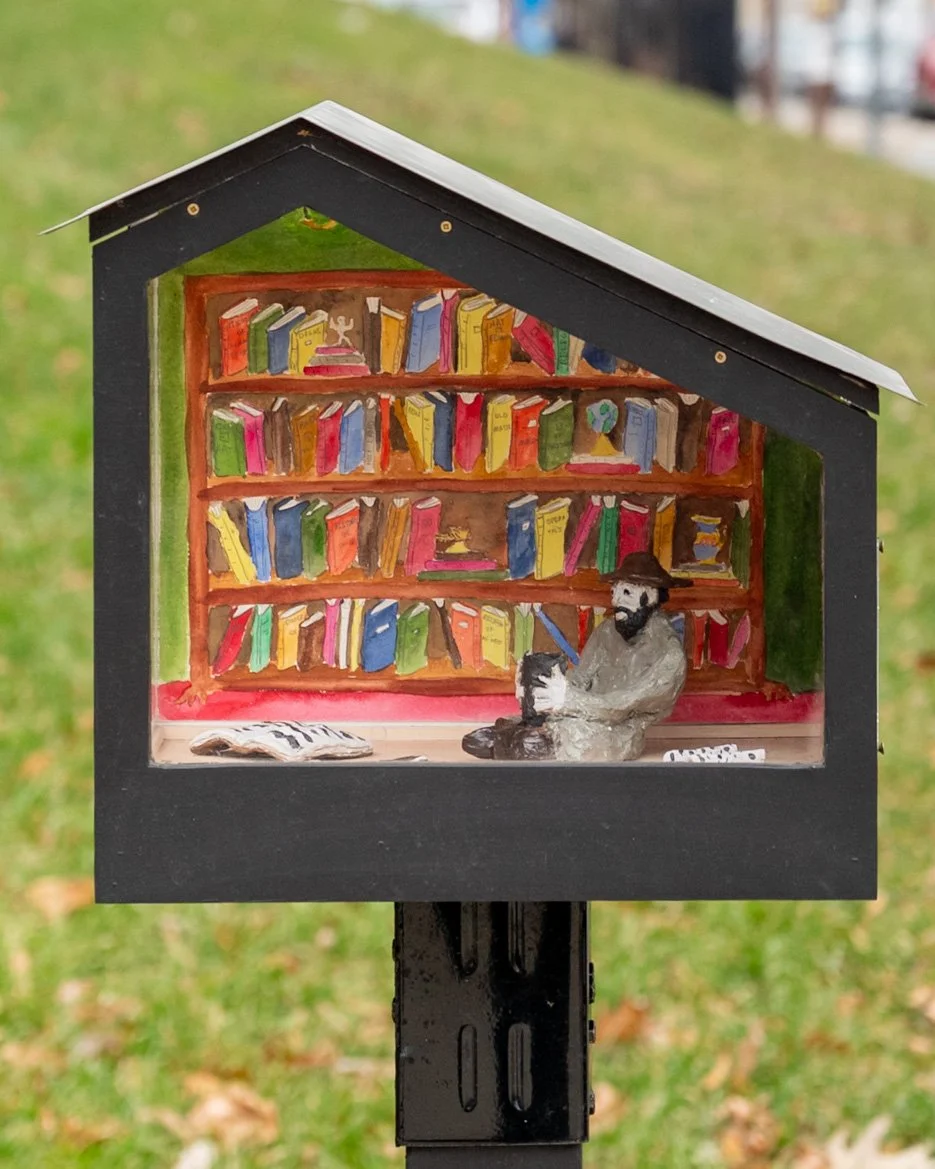
Henry Rosenberg's The Narrator is a room for story sharing. The exhibition recalls the stage, complete with props, scenery, and a main character. Books and art objects line the walls. A large painting depicting the famous opera La Tosca hangs above a handsome armchair where a reader might contemplate Theology or Psychology of Human Behavior-titles that fill the room's bookshelves. Between texts that tackle the humanities, we spot a globe, vase, and a small marble statue of a Roman wrestler, artifacts that suggest collecting and knowledge of far-away worlds.
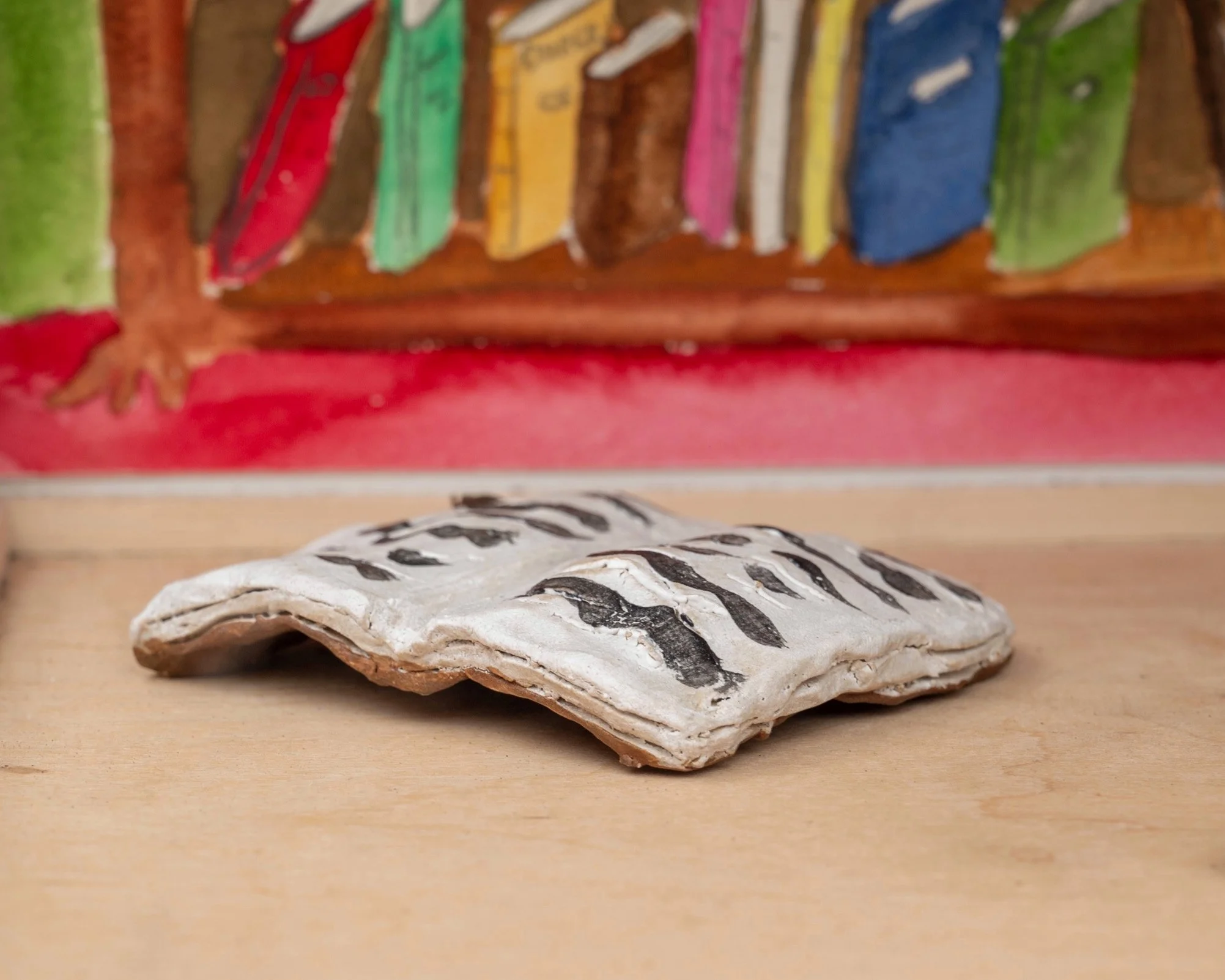
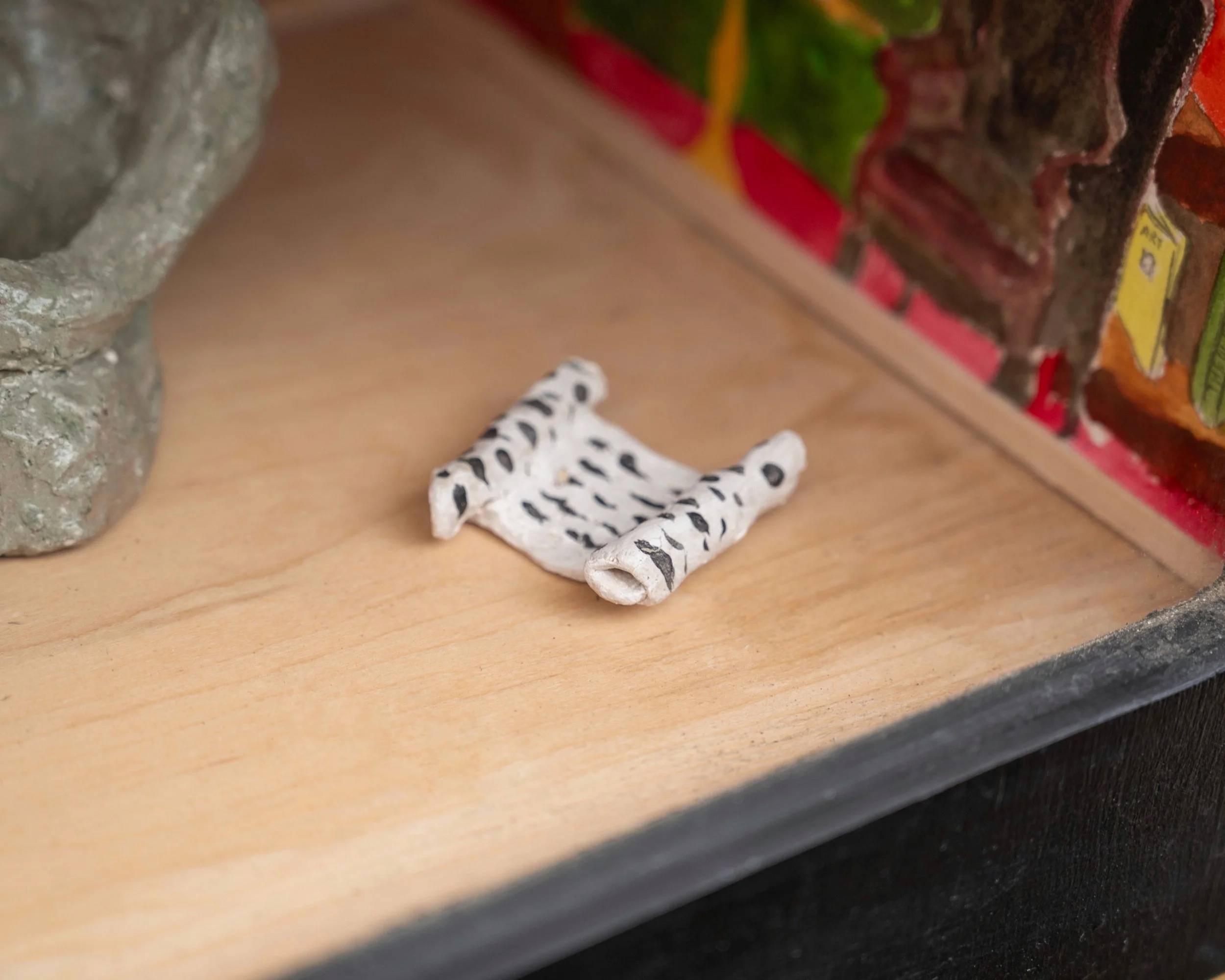
On the floor, center stage, Rosenberg's clay narrator sits surrounded by books and an unrolled scroll. He sports a healthy beard and wide-brimmed hat, reminiscent of a 19th-century travel writer. With a chandelier overhead and book jackets whose bright colors have worn soft over time, the narrator's room has a cozy glow, one that invites tweed jackets with elbow patches and the romanticization of a PhD journey.
Rosenberg likes the idea of "cozy" and how it is evoked with images of yesteryear. A big fan (and admitted novice) of opera and an artist trained in centuries-old printing press processes, these art traditions permeate his work. The opera's red velvet curtain that announces each grand performance is echoed in the library's red rug on which bookshelves stand tall, displaying books titled Rembrandt and Old Masters. However, Rosenberg recognizes that when you interrogate the pleasantries of these historic spaces, they are only comfortable for a privileged few. In the case of his model antique library, Henry asks "What texts are present? What are they really about?" and "Who do they serve?"
Historically, the printed word was seen as "the truth." A signifier of education and power, books simply stated "the way things were" — uncontestable and accurate. With his focus on the narrator, Rosenberg aims to dismantle the idea of print as veracity. The narrator is a performer, someone who takes the printed word and transforms it beyond the book. In doing so, he gifts these histories different perspectives. As print becomes performed, stories are passed to new audiences. Like a game of broken telephone, the story morphs-each narrator playing their hand its in remaking. The once-omniscient printed word enters casual storytelling with egalitarian potential.
The Narrator has collaborated with The Little Free Library, inviting exhibition viewers to assume the role of storyteller. Curated in response to the titles in Rosenberg's drawings, the public library acts as a continuation of the story. With classic tales, historical accounts, and childhood favorites, Rosenberg and his clay narrator hope you join them.